.png?width=1959&height=424&name=AltamIQ-Horizaltal-logo%20(1).png)
Cybersecurity Reseller Certifications: Tracking Palo Alto, CrowdStrike, Fortinet & Microsoft Security Without Losing a Client Mid-Contract

Altamiq
In most partner segments, a lapsed certification is a margin problem: pricing gets worse, a discount disappears, a deal gets renegotiated. In cybersecurity, it can be something else entirely — a lapsed technical certification can mean the firm is no longer eligible to renew or actively support a client's live security infrastructure, in the middle of an active contract, with real production risk sitting on the other side of that gap.
That's the stake that makes certification tracking a genuinely different order of priority for cybersecurity resellers and integrators than it is almost anywhere else in the technology partner landscape — and it's exactly why the firms getting this right treat it as core operational infrastructure, not administrative overhead.
The certification landscape a typical security integrator is juggling
A firm specializing in enterprise security rarely holds a single vendor relationship. It's close to structurally guaranteed to be multi-vendor, because no single security platform covers a client's full stack — firewall, endpoint, identity, and SIEM are typically different vendors, each with its own aggressive, frequently-updated certification program:
- Palo Alto Networks — certifications like PCNSE and PSE, which are often directly tied to resale and support eligibility, not just a marketing badge.
- CrowdStrike — Falcon partner program certifications spanning both technical and sales tracks, tiered by partner level.
- Fortinet — the NSE certification track, with multiple sequential levels required to reach and maintain higher partner status.
- SentinelOne, Sophos, Trend Micro — vendor-specific partner tier programs, each with its own certification requirements.
- Microsoft Security — a certification path distinct from the core Microsoft Solutions Partner designations, which matters especially because many security integrators are simultaneously MSPs, meaning this overlaps directly with a separate, already-heavy Microsoft compliance load.
- SIEM and SOC platforms (Splunk, IBM QRadar, Exabeam, and similar) — their own partner certification requirements, often technically demanding and specific to platform version.
Multiply any three or four of these across a mid-size integrator's team and the honest headcount of active, individually-tracked certifications routinely runs into the dozens — each with its own expiry date, its own renewal exam or process, and its own consequence for lapsing.
Why security vendor certifications move faster than almost any other category
Security vendor certification programs are unusually aggressive about renewal cadence for a structural reason: the threat landscape moves continuously, and a certification that validates competence against last year's attack surface isn't actually validating current capability. Vendors update exam content, renewal requirements, and sometimes entire certification tracks on a shorter cycle than slower-moving categories like general cloud infrastructure certifications. A firm that treats security certifications with the same "check back in two years" cadence it applies elsewhere is very likely underestimating how often something in this specific stack needs active attention.
The compounding risk: most security integrators are also MSPs
Very few firms sell security certifications in isolation — the segment overlaps heavily with the broader MSP category, meaning a typical cybersecurity integrator is tracking Palo Alto, CrowdStrike, and Fortinet certifications alongside Microsoft CSP compliance, Microsoft Security designation requirements, and often Cisco specializations, all at once. That's not two separate, manageable compliance loads running in parallel — it's one team, tracking a genuinely large and fast-moving set of requirements across every one of those programs simultaneously, with essentially no margin for a system that only tracks some of it well.
The scenario that keeps CEOs up at night, for good reason
|
A REALISTIC FAILURE PATTERN A client's endpoint detection and response contract comes up for renewal. During the renewal process, the vendor flags that the specific technical certification required to support that product has lapsed — quietly, months earlier, when the certified employee shifted focus to a different account. The firm isn't just losing pricing or a badge. It's discovering, at the renewal call, that it may not be contractually eligible to keep supporting a client's live security infrastructure at all. |
This is precisely the scenario that separates cybersecurity certification tracking from almost every other partner compliance category covered elsewhere: the consequence isn't a worse quarter, it's an active client relationship placed at genuine risk, discovered at the worst possible moment because nothing surfaced the lapse earlier.
Building a security certification bench
Given the stakes, redundancy isn't a nice-to-have for cybersecurity integrators — it's the single highest-leverage risk-reduction move available. A "certification bench" means intentionally maintaining more than the bare-minimum number of certified individuals per required credential, so that one departure, one extended leave, or one employee's shift to a different account doesn't create an immediate, contract-threatening compliance gap.
1. Identify every certification tied to an active, contractually-dependent client relationship — not just the certifications that unlock partner tier, the ones a specific client's support or renewal eligibility actually depends on.
2. For each one, confirm at least two currently-certified individuals hold it, not one — and if only one does, treat closing that gap as an active priority, not a someday item.
3. Track renewal timelines with real lead time — security certification exams often require meaningful preparation, so a 60-day advance flag is the minimum, not the ideal.
4. Explicitly map which certifications gate which specific client contracts, so a lapse triggers an immediate, specific risk assessment — "this certification affects these three active client relationships" — rather than a generic compliance notice.
A practical audit checklist for cybersecurity integrators
- Do we have a complete, current list of every certification every active security vendor partnership requires — by individual and by program minimum?
- For every certification tied to an active client contract, do we have certified-bench redundancy, or single-point-of-failure exposure?
- Do we know, without checking, which certifications expire in the next 60 days?
- If our most security-certified employee left tomorrow, which client relationships would be at immediate risk?
How AltamIQ tracks the full security vendor stack in one view
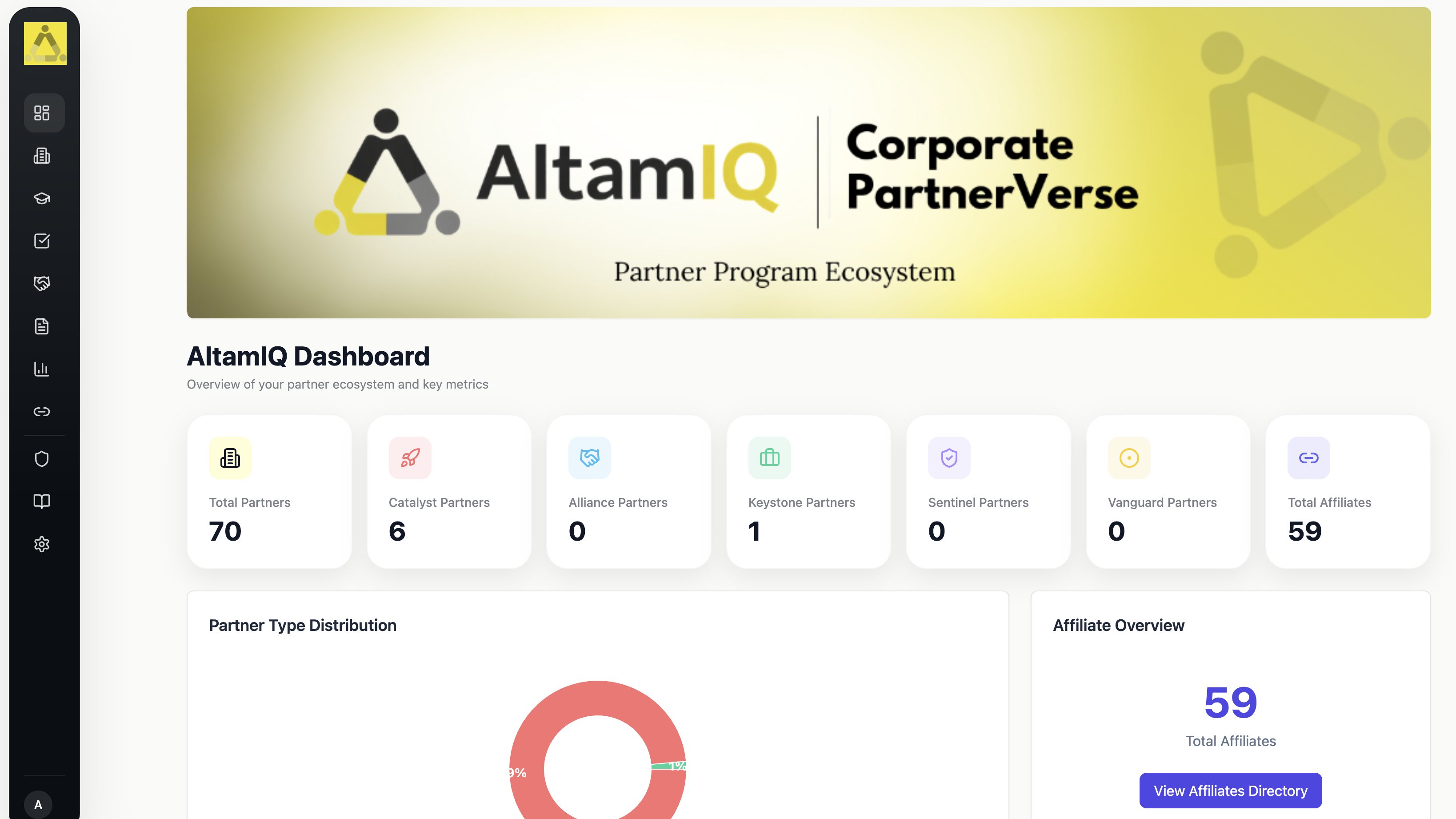
AltamIQ tracks every certification your team holds across every security vendor — Palo Alto, CrowdStrike, Fortinet, Microsoft Security, and the rest of the stack — alongside the Microsoft CSP, Cisco, and cloud certifications most cybersecurity integrators are carrying at the same time, with proactive alerts well ahead of expiry and full visibility into which certifications gate which client relationships. For a segment where the cost of a lapse isn't just a lost deal but an active client's security posture, that visibility isn't a convenience — it's the operational discipline the stakes actually require.